

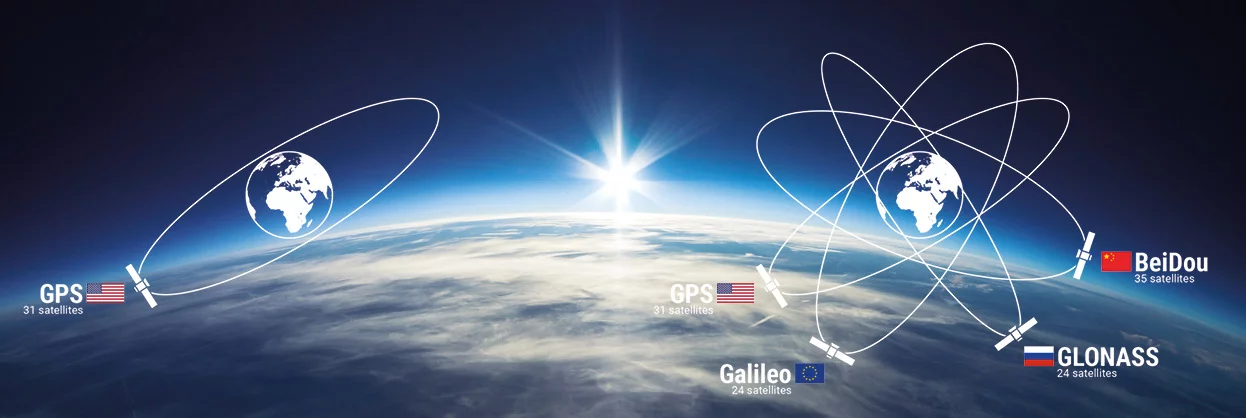
Global Navigation Satellite Systems (GNSS) have revolutionized the way we navigate, communicate, and manage data. From GPS in our smartphones to advanced applications in autonomous vehicles, GNSS system are at the heart of modern technology. As we move into the future, the future of GNSS systems is poised to see groundbreaking developments. This article explores the key trends and innovations shaping the future of GNSS and what we can expect in the coming years.
Understanding GNSS: A Brief Overview
Before delving into the future, it’s essential to understand what GNSS is and how it works. GNSS refers to a collection of satellite-based systems used for positioning, navigation, and timing (PNT). The most well-known GNSS system is the U.S.-based GPS, but others like Russia’s GLONASS, Europe’s Galileo, and China’s BeiDou also play significant roles. These systems provide critical services for industries like transportation, agriculture, emergency response, and more.
Key Trends in the Future of GNSS Systems
As technology evolves, so do GNSS systems. The future of GNSS will be shaped by several emerging trends that promise to enhance performance, reliability, and security.
1. Integration with Other Technologies
One of the most significant trends in the future of GNSS systems is their increasing integration with other emerging technologies. For instance, GNSS is now being combined with 5G networks to enable faster and more accurate positioning for real-time applications. Additionally, the rise of the Internet of Things (IoT) will require more precise location tracking, making GNSS systems an integral part of IoT infrastructure.
2. Improved Accuracy and Resilience
The demand for more accurate and reliable positioning has led to significant advancements in GNSS technology. Innovations such as Real-Time Kinematic (RTK) positioning and Precise Point Positioning (PPP) are expected to continue evolving. These technologies enable centimeter-level accuracy, which is critical for sectors like autonomous driving, precision agriculture, and disaster management.
Furthermore, future GNSS systems will likely become more resilient to disruptions. With the growing threat of signal jamming and spoofing, there is a push toward more robust encryption and multi-frequency systems to enhance security and reliability.
3. Expansion of Satellite Constellations
In the coming years, we can expect the expansion of existing satellite constellations and the launch of new ones. For example, the European Union’s Galileo system and China’s BeiDou constellation are expected to continue growing, providing better global coverage and increasing the redundancy of satellite signals. This expansion will ensure that GNSS services are available even in remote and challenging environments, such as deep urban canyons or dense forests.
4. Enhanced Autonomy in Transportation
The future of GNSS systems is intricately linked to the growth of autonomous vehicles. As self-driving cars, drones, and ships become more common, accurate, real-time positioning will be essential. GNSS systems, particularly when combined with other sensors like LIDAR, cameras, and radar, will enable these vehicles to navigate safely without human intervention. Innovations such as multi-frequency GNSS receivers and the integration of AI will further enhance the precision and reliability needed for autonomous systems to function.
Innovations Shaping the Future of GNSS
Several exciting innovations are currently underway that will impact the future of GNSS systems in transformative ways.
1. Quantum Technologies
Quantum technology is expected to play a significant role in the evolution of GNSS systems. Quantum clocks, which are incredibly precise, have the potential to enhance the timing accuracy of GNSS systems, leading to improvements in navigation performance. Quantum sensors can also be used to detect and correct for errors in GNSS signals, making the systems even more reliable.
2. Advanced Signal Processing
As GNSS systems become more advanced, so does the signal processing technology behind them. Innovations in algorithms and signal processing techniques will help mitigate issues like multipath interference and signal degradation. These advancements will ensure that GNSS systems can continue to provide reliable positioning in increasingly complex environments, including urban areas with tall buildings or in rural regions with poor satellite visibility.
3. Artificial Intelligence and Machine Learning
Artificial Intelligence (AI) and Machine Learning (ML) are making their way into GNSS systems, improving their functionality. AI can help optimize satellite constellation management, predict satellite health, and enable real-time processing of GNSS data to provide better accuracy and faster results. Machine learning can also be used to predict GNSS anomalies and improve system efficiency over time.
The Future Outlook: What to Expect
As we look to the future, the future of GNSS systems appears bright, with continued innovation and integration into everyday life. From autonomous transportation to next-generation mobile devices, GNSS technology will continue to be an essential backbone for numerous applications. The continued evolution of satellite constellations, the rise of quantum technologies, and advancements in signal processing and AI will shape the next generation of GNSS systems.
In conclusion, as GNSS technology evolves, it will drive numerous industries forward, improving precision, security, and reliability. By embracing these trends and innovations, we can expect GNSS systems to play an even more significant role in the global technological landscape in the years to come.
