

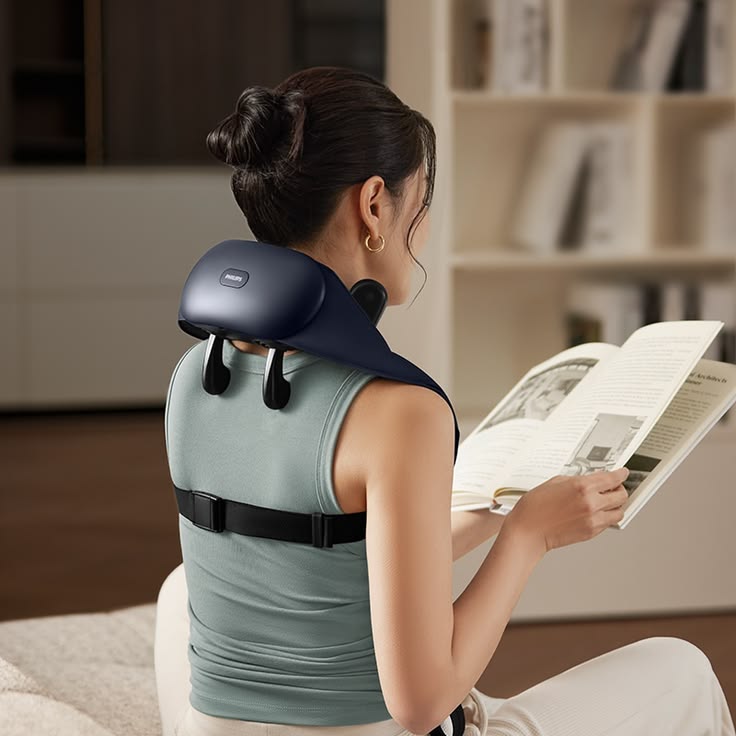
Modern massage technology has moved far beyond simple vibration. One of the most advanced developments in recent years is 4D kneading mechanics—a system designed to replicate the depth, rhythm, and variability of human hands. These systems are now widely used in neck, shoulder, and back massagers, offering a more realistic and effective experience for relieving muscle tension.
The idea behind 4D kneading is not just stronger pressure, but smarter motion Neck and Shoulder Massager. By combining speed variation, directional changes, depth control, and rhythmic timing, these devices simulate how a trained massage therapist works across different muscle layers.
Understanding how this technology works helps explain why modern massage nodes feel significantly more natural and effective than earlier generations of devices.
What “4D Kneading” Actually Means
The term “4D” refers to four key dimensions of motion used in advanced massage systems:
- Depth: how far the nodes press into the muscle
- Speed: how quickly the nodes move
- Direction: multi-angle rotation and shifting patterns
- Time variation: changing rhythm and pressure cycles
Together, these factors create a dynamic massage experience that feels less mechanical and more human-like.
Unlike basic 2D or 3D systems, which use fixed patterns, 4D mechanics constantly adjust intensity and movement to mimic natural hand behavior.
How Human-Like Massage Nodes Work
At the core of 4D systems are specially engineered nodes that act like robotic thumbs or fingers. These nodes are mounted on motorized arms that control their movement across multiple axes.
1. Variable Depth Pressure
One of the defining features of 4D kneading is the ability to adjust pressure depth dynamically. Instead of pressing at a fixed level, the nodes move deeper or lighter depending on the programmed pattern.
This mimics how human hands naturally adjust pressure when working on tight or sensitive areas.
Deeper pressure helps target:
- Muscle knots
- Trigger points
- Chronic stiffness in deep tissue layers
2. Multi-Directional Rotation
Unlike simple rotating nodes that move in one circular direction, 4D systems can shift angles and reverse direction during a single cycle.
This creates a more unpredictable and natural feeling, similar to how a massage therapist changes hand position while working across muscle groups.
3. Speed Modulation
Human massage is never perfectly uniform. Pressure changes in response to muscle feedback. 4D systems replicate this by varying speed throughout the session.
Slower movements are used for deep relaxation, while faster cycles help stimulate circulation and loosen surface tension.
4. Rhythmic Variation
One of the most important elements of 4D mechanics is rhythm variation. Instead of repeating identical patterns, the system alternates between:
- Deep pressure holds
- Slow kneading cycles
- Quick release phases
- Gentle recovery movements
This variation prevents muscle adaptation and keeps the tissue responsive.
Why 4D Technology Feels More Realistic
The human body responds better to unpredictable, adaptive stimulation than to repetitive motion. Traditional massage devices often feel mechanical because they follow a fixed pattern.
4D systems solve this by introducing variability, which:
- Prevents muscle “tension resistance”
- Enhances relaxation response
- Improves sensory realism
- Targets multiple muscle layers more effectively
The result is a massage experience that feels closer to human touch.
The Role of Motor Engineering in 4D Systems
Behind the smooth motion of 4D kneading is a combination of precision motors and control algorithms.
Brushless Motors
Many modern devices use brushless motors, which provide:
- Quiet operation
- Consistent torque
- Longer lifespan
- Smooth motion transitions
Intelligent Motion Control
Microprocessors adjust node movement in real time, ensuring that pressure and rhythm changes remain smooth rather than abrupt.
This allows the system to adapt within a single massage session.
How 4D Kneading Affects Muscle Tissue
The effectiveness of 4D massage is not just mechanical—it is physiological.
1. Deep Tissue Relaxation
Variable depth pressure helps reach both superficial and deep muscle layers. This is especially useful for chronic tightness in the neck, shoulders, and upper back.
2. Improved Circulation
Alternating pressure and release cycles stimulate blood flow, which helps deliver oxygen to fatigued muscles.
3. Trigger Point Release
Dynamic kneading helps break down localized knots by applying focused pressure from different angles.
4. Nervous System Response
The changing rhythm helps shift the body from a stress state to a relaxation state, reducing overall muscle guarding.
Where 4D Kneading Is Most Effective
4D massage technology is particularly effective in areas where muscles are dense and prone to tension:
- Neck and cervical spine
- Upper trapezius (shoulders)
- Upper and mid-back
- Lumbar region
These areas benefit from deeper, adaptive pressure patterns.
4D vs Traditional Massage Nodes
Traditional massage devices often rely on simple vibration or fixed rotation. While these can provide temporary relief, they lack adaptability.
4D systems improve on this by introducing:
- Depth variation instead of fixed pressure
- Multi-directional movement instead of single rotation
- Adaptive rhythm instead of repetitive cycles
- More realistic hand-like motion
This makes them more effective for long-term muscle relief rather than just surface relaxation.
Benefits of Regular Use
When used consistently, 4D kneading devices can contribute to noticeable improvements:
Reduced Muscle Stiffness
Deep and varied pressure helps prevent chronic tightness from building up.
Better Posture Support
Relaxed muscles allow the body to maintain alignment more easily.
Improved Recovery
Enhanced circulation supports faster muscle recovery after daily strain.
Increased Comfort
Regular relief reduces overall discomfort during work and rest.
Limitations to Consider
Despite their advanced design, 4D systems are not perfect.
Not a Replacement for Professional Therapy
They cannot fully replicate the skill and adaptability of a trained massage therapist.
Learning Curve
Users may need time to find the right intensity and settings.
Device Dependency
Effectiveness depends on consistent use and proper positioning.
Why 4D Kneading Represents a Shift in Wellness Tech
4D massage technology reflects a broader trend in personal wellness: bringing professional-level care into everyday environments.
Instead of relying on occasional treatment, users can now access advanced muscle therapy at home or on demand.
This shift makes recovery more consistent and accessible.
Final Thoughts
4D kneading mechanics represent a significant evolution in massage technology. By combining depth control, directional variation, rhythmic changes, and intelligent motion, these systems bring modern devices closer to the experience of human touch.
While they do not replace professional care, they offer a highly effective way to manage everyday muscle tension, especially in the neck, shoulders, and back.
In a world where physical strain is constant and time is limited, 4D massage technology provides a practical, intelligent solution for maintaining comfort, mobility, and long-term muscle health.